
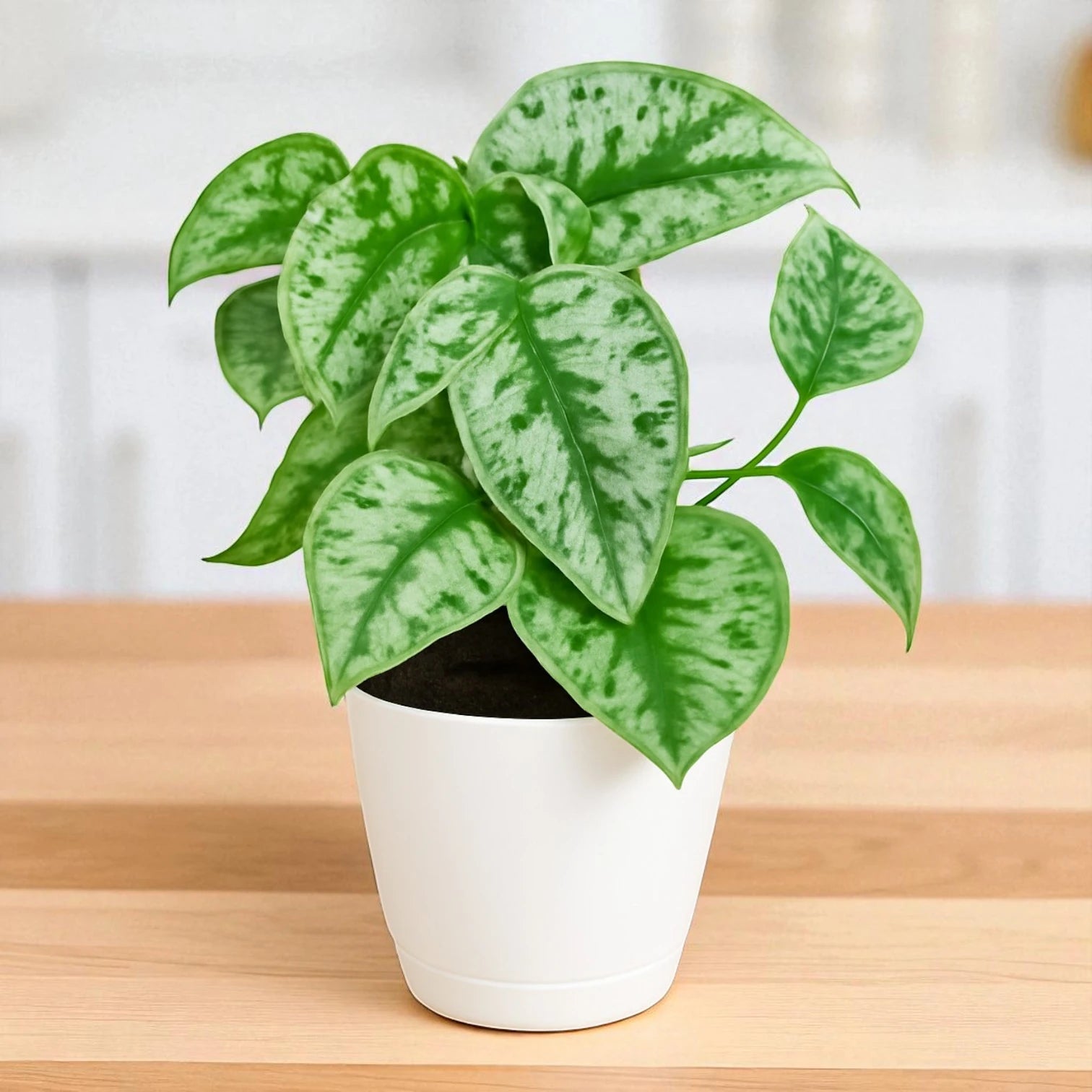


Scindapsus Pictus (Satin Pothos — Silver Pothos)
Description
Scindapsus Pictus (Satin Pothos) “Silver Pothos” is a trailing or climbing houseplant with soft velvet heart shaped foliage that features silver speckles throughout. But surprisingly this is not really a pothos. This unique plant is from the Scindapsus genus, giving it only a distant relation to your typical green Pothos (Epipremnum). In its native Southeast Asian rainforest habitat this plant often trails along trees, helped by small aerial roots.
Satin Pothos will arrive to you as a sapling housed in a 3 inch pot or bare-rooted. Over time its vines will develop and its silvery leaf patterns will become more distinct. It can be left to hang and trail from your shelving and hanging baskets or trained up a moss pole for a taller plant with bigger leaves, a nod to its native conditions.
It's a forgiving plant, loving medium to bright light but doing OK in lower levels - just be aware it'll lose its cool patterns in the shade! This plant loves the living room, balconies with light shade or well-lit shelf space that's out of the way of the harsh midday sun.
Pothos 'Satin'. This plant is purely cultivated for its gorgeous leaves,as it has been noticed to seldom bloom inside the home, in general, with satin pothos, you could observe it develop a bit slower compared to your golden pothos and develop thicker, firmer, more durable, thereby more manageable leaves.
Key Features
- Lovely velvet heart shaped leaves with beautiful silver gray variegation.
- Easy to grow on a moss pole, as a hanging or climbing plant in a hanging basket, on a trellis or as ground cover.
- Loves a medium to bright light but the variegation will pop even more in a well lit spot.
- Slow to moderate growers and fairly manageable in less space
- Smaller than a standard pothos with thicker, fleshy leaves.
- Perfect for living room decor, shaded or filtered light balconies, shelves and desks.
- Small when young which can be easy to manage - also good for beginner houseplant growers or for apartment dwelling!
- Excellent choice to contrast against solid green foliaged plants and to add visual appeal
Care at a Glance
|
Care Aspect |
Requirement |
|
Sunlight |
Medium to bright indirect light; tolerates lower light but variegation fades |
|
Watering |
Let the soil dry at the top 1-2 inches prior to watering again. Don’t keep the soil water logged. |
|
Temperature |
Best between 18°C and 29°C; avoid temperatures below 15°C and cold drafts |
|
Humidity |
Prefers moderate to high humidity; benefits from occasional misting in dry conditions |
|
Repotting |
Every 1–2 years, or once roots fill the current pot |
|
Growth rate |
Slow to moderate |
Product Specifications
|
Specification |
Details |
|
Plant common name |
Satin Pothos, Silver Pothos, Silver Vine |
|
Botanical name |
Scindapsus pictus |
|
Plant type |
Indoor foliage plant, trailing/climbing vine |
|
Life cycle |
Perennial |
|
Suitable location |
Indoor; living rooms, balconies with filtered light, shelves, office desks |
|
Sunlight exposure |
Medium to bright indirect light |
|
Bloom period |
Rarely flowers indoors |
|
Special features |
Velvety silver-splashed foliage, trailing or climbing habit |
|
Plant size at dispatch |
3 inches |
|
Bare-rooted/Pot |
Optional |
|
Pot size |
3 inches |
|
Pot material |
Plastic nursery pot |
|
Soil type |
Well-draining, nutrient-rich potting mix |
|
Country of origin |
India |
|
Brand |
Plant Orbit |
|
Seller |
Plant Orbit Haldawni |
What's in the Box
- 1 × Live Scindapsus pictus sapling
- 1 × Pot (Bare-rooted / Pot: Optional)
- Potting mix
- Care guide
Important Notes
- Because all of the plants are living things, each plant is a little bit unique from another in leaf size, silver pattern, or vine length.
- Drooping and sometimes a small amount of leaf loss can be expected on delivery, and will mostly resolve as it adjusts.
- Do not situate this plant in a very hot, direct spot in the sun, as this will burn its leaves and the silver marking may even wear away.
- If the light is low, young foliage doesn't necessarily take on as much silver tones, it would be normal.
- This plant doesn’t like to get too soggy so you only need to give it water again once the top few cm of soil feels particularly dry
- If this plant is consumed and it's chewed on by children or pets the plant becomes toxic
Frequently Asked Questions
Q: My plant’s leaves are turning yellow, why?
A: That means that you are overwatering. Check that your plant’s container is not sitting in water, and that you’re waiting until the top 1-2 inches of soil is dry to water it. This plant can get by with slight underwatering, but can not stand to be too wet.
Q: How often should I water this plant?
A: Well there's no set time frame because it really does rely on where you live and how light you receive. A general rule of thumb would be if you feel the soil around your plant is getting a bit dry you may want to give your plant a good drink of water. This usually works out to somewhere about once every week to two weeks at home.
Q: Will this plant do well in a low light environment?
A: Yes, this plant can tolerate lower light than a lot of variegated houseplants, however you may notice that the new leaves aren’t as bright in colour where they are silver, and your plant may grow slower. This will do best with medium to bright indirect light to maintain maximum vibrancy
Q: Is this plant a fast grower?
A: This plant has slow to moderate growth, probably even slower than your typical golden pothos. During the spring and summer months some steady growth of new leaves if provided enough light, and as your plant grows the leaves on a climbing plant can actually get bigger.
Q: Should I let it climb or let it trail?
A: You can let your plant either climb up a support like a moss pole, which would lead to more mature, larger leaves – mimicking it growing in its natural habitat. You can also let it trail down from a bookshelf or hanging basket, producing smaller, more contained leaves.
Q: Is this plant safe to have around pets?
A: No. This is because this plant is a member of the Araceae family, just like all others which contain calcium oxalate crystals which could irritate, nauseate or cause loss of appetite if chewed or consumed by your dog, cat or toddler. It is not advisable to have this around children or pets.


