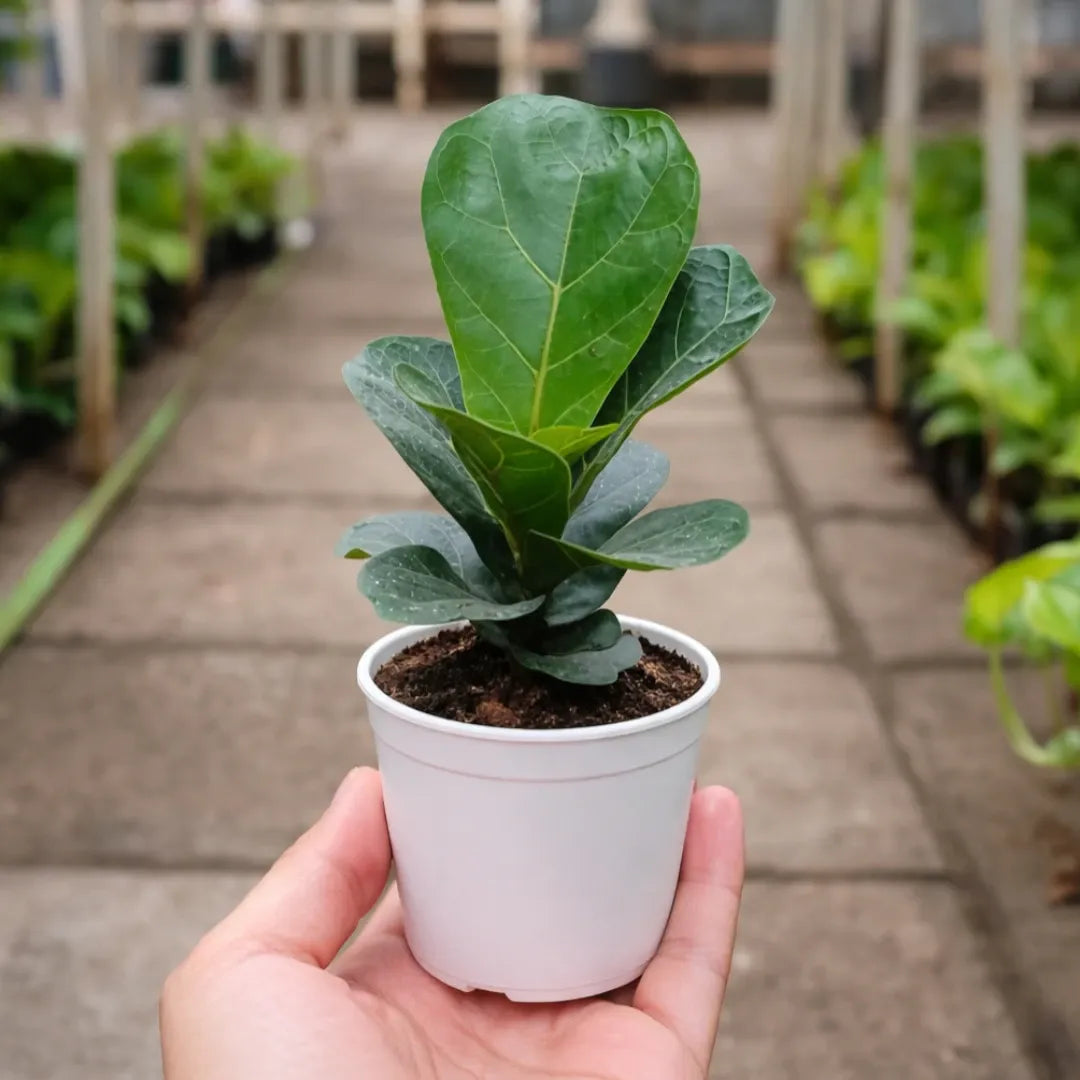
Ficus Lyrata Sapling (Fiddle Leaf Fig)
Description
The Ficus lyrata – what most people will recognize as thefiddle-leaf fig– is a daring specimen hailing from African forests – from as far West as Sierra Leone all the way to Cameroon. It is known for its large, shiny, dark green leaves with veining, and is sure to make a statement piece!
The cleverest way to grow Ficus Lyrata at home is with a sapling. Saplings take from the get-go, completely avoiding the shock from transplanting which knocks off all the leaves of established plant specimens. Best of all, you'll know you’ve been part of the journey to achieve floor-to-ceiling floor-show for yourself!
Ficus Lyrata enjoy position by a well- lit window giving bright indirect sunlight, east or northeast-facing is good. It will enjoy between 16-28C (60-80F), avoid drafts from windows or air vents and mist the foliage sometimes in winter months to increase humidity.
A good regime and no excessive coddling on your behalf, will make for this to climb as high as 6-10 feet indoors - for the Ficus Lyrata truly works as a striking specimen over the years.
Key Features
- Large fiddle-shaped leaves; with rich veins and a dark, glossy green top
- Originating in the tropical rainforests of West Africa, this eventually becomes a substantial and structural indoor plant
- It is best to do that to a baby then so the puppy grows accustomed to the surrounding in your home
- Feel your best and happiest sitting in one constant spot in a well lit, indirect light - time to find your special happy place!
- Will need watering consistently whenever the top few centimetres of its soil are dry.
- The plant will develop into a statement indoor specimen 2m (6’7”) tall or more over time
- If leaves are wiped gently periodically, this will help to keep the plant’s leaves free of dust.
- Can harm kitties and dogs when ingested - please keep them away from these snack animals!
Care at a Glance
|
Sunlight
|
Bright, indirect light near a well-lit window; a little gentle morning sun is fine but avoid harsh afternoon sun
|
|
Watering
|
Water once the top 4–5 cm of soil feels dry; water thoroughly, allow to drain, and never let the pot sit in standing water
|
|
Temperature
|
16°C to 28°C (60°F to 82°F); avoid cold drafts, AC vents, and temperatures below 12°C
|
|
Humidity
|
Moderate to slightly above-average humidity; misting or a pebble tray helps during dry months
|
|
Repotting
|
Every 2–3 years, or when roots begin to push out of the drainage holes; move up one pot size at a time
|
|
Growth rate
|
Slow to moderate indoors; faster once the plant has settled and is receiving consistent care and adequate light
|
Product Specifications
|
Plant common name
|
Fiddle Leaf Fig, Banjo Fig, Lyre Leaf Tree
|
|
Botanical name
|
Ficus lyrata
|
|
Plant type
|
Indoor foliage tree / specimen plant
|
|
Life cycle
|
Perennial evergreen
|
|
Suitable location
|
Living room, hallway, study, office — anywhere with a bright, stable light source
|
|
Sunlight exposure
|
Bright, indirect light; tolerates a little filtered morning sun
|
|
Bloom period
|
Does not flower or fruit under typical indoor conditions
|
|
Special features
|
Large, architectural fiddle-shaped leaves; long-lived specimen plant; grows tall over time
|
|
Plant size at dispatch
|
Approx. 3 inches
|
|
Bare-rooted / Pot
|
Optional
|
|
Pot size
|
3 inches
|
|
Pot material
|
Plastic nursery pot
|
|
Soil type
|
Well-draining indoor potting mix
|
|
Country of origin
|
India
|
|
Brand
|
Plant Orbit
|
|
Item weight
|
As per pot size and soil moisture at the time of dispatch
|
|
Package dimensions
|
As per pot size and packaging used for safe transit
|
|
Seller
|
Plant Orbit Haldawni
|
What's in the Box
- 1 × Live Ficus Lyrata Sapling
- 1 × Pot (Bare-rooted / Pot: Optional, as selected at purchase)
- Potting mix
- Basic care guide
Important Notes
- Ficus lyrata don't enjoy being moved, so place yours in an excellent location and stick to it as much as you can. That often causes more Ficus to drop leaves than any other thing.
- A couple leaves in the first week or so is not unheard of... The plant has gone from one environment to the other, be patient, steady it will usually self fix.
- Keep this guy far away from air vents, fans, or even open windows and doors. Cold or moving air is arguably one of the most common causes of a distressed Fiddle Leaf Fig.
- Take the large leaves, wiping down the top of them softly every two weeks or so with a dampened cloth. Dust on these large surfaces can settle and impede with light.
- SAP LATEX Ficus lyrata sap is milky which can be irritating on skin, therefore gloves should be worn when pruning and propagation.
- ASPCA have registered it as dog and cat safe, and it would be ideal to keep this plant out of reach from your pets if your cats/dogs enjoy a nibble.
Frequently Asked Questions
Q: Why is my Ficus Lyrata Sapling dropping leaves?
A: Your Ficus Lyrata sapling is almost certainly shedding leaves because it’s had a recent move, it had over/under watering, been near cold drafts/ac or because it was put in a new light source. Give that a few weeks and usually the plant settles in. That is normal to an extent for any Ficus Lyrata.
Q: Signs your Ficus Lyrata Sapling needs water?
A: Insert an inch or two of your fingers below the soil’s surface. If the soil feels dry to you, water deeply until water can come out of the drainage hole at the bottom of your pot. If it feels moist, leave it for sometime till the soil is dry. Water at the touch, not the time.
Q. Can Ficus Lyrata Sapling be indoors all year round?
A: Yes if the plants are placed in a well-lit and well-aerated location and away from any drafts, the effects of air-conditioning systems and direct strong afternoon sun.
Q: Why are my Ficus Lyrata's leaves developing brown spots?
A: Brown spots or edges around the leaves often indicate over or under watering and if dark brown it’s a sign of the roots rotting, but check how you’re watering & if water is escaping the pot first! New brown and reddish spots on the emerging new leaves suggest that your new leaf development may have gotten wet in periods of heavy humidity.
Q: How rapidly do Ficus Lyrata Saplings grow inside?
A: The initial stage may seem slow as a root system is developed but a Ficus Lyrata Sapling in a nice bright room may put on several leaves per growing season, growing quite large.
Q: My plant is a Baby Lyrata and is asking When do i need to re- pot this and feed this
A: Only re pot your baby fig once you see roots coming from the base of the pot and or the fig starts to thirsty more than one time a week, re pot to one size bigger pot, Start fertilizing your Ficus Lyrata Sapling one month after planting in its new pot, giving one half strength of a balanced liquid plant fertilizer once per month over the growing season, stopping in winter.