
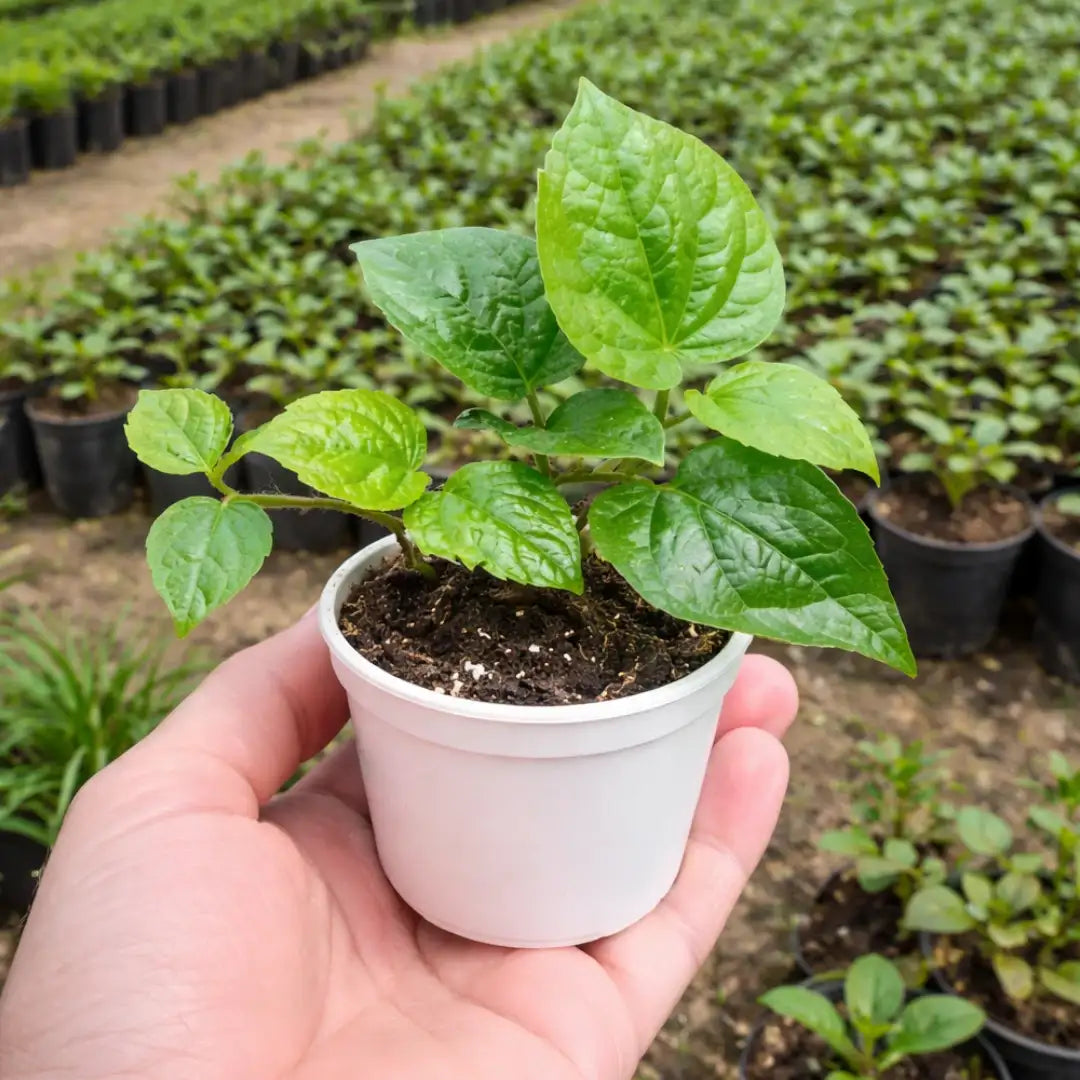
Betel Leaf (Beetle Paan)
✅ Exclusive Bonus Offer just for you!
🎁 Get 5% OFF automatically on orders above ₹599
📦 Easy Returns – Compulsory Unboxing Video
Couldn't load pickup availability
How we work!
How we work!
Add a touch of green to your home/office in three simple steps and become a plant parent.
Plants,
simplified: Order plants ready to be placed in your home, office or
garden. Just Unpack, Relax and Enjoy your green buddies
Secure
Shipping: Our unique packaging will hold the plants in place and let the
plant breathe so that it reaches you fresh without any mess.
Detailed
Guidance: Get detailed plant care instructions from the website as well
as real-time guidance from our Garden Experts on Whatsapp.
Care Tips
Care Tips
1. After recieveing the plants open the box 📦 as soon as possible .
2. Air dry the plants for 2-3 hours on fresh air .
3. Plant in well drained soil . ( 30%sand + 30% soil + 20% vermicompost + 20% perlite ) .
4. Water plants after 2-3 days and don’t give direct sunlight to newly planted succulents for at least 10 days .
Note: Always water succulents when top layer of soil feels dry in roots of plant rather than leaves .
Shipping
Shipping
Plants without pots will be sent bare rooted. Free delievery above Rs 249 .
Refund Policy
Refund Policy
We have a 2-3 days return policy, which means you have 2-3 days after receiving your item to request a return or replacement.
Description
Description
Betel Leaf Plant, Paan (Piper betle)
Description
The Betel Leaf Plant, or Piper betle, is a vigorously growing tropical vine, boasting beautiful, heart-shaped glossy green leaves commonly known as "paan" to many throughout South and Southeast Asia. Each soft and waxy leaf releases a fresh, bright, "green" fragrance when broken or chewed. The Betel Leaf plant's incredible history with human culinary use, as a hospitality symbol, and cultural component make this plant a truly exceptional houseplant.
Naturally, The Betel Leaf Plant is an understorey tropical climber which holds onto trees and vegetation using small rootlets along its stem. This could include tying up to a stake, a moss pole or trellis in your home environment, or allowing a trail from a pot to make an underhanging feature. Betel Leaf Plants thrive in humid environments and if regularly pruned, will promote denser, more bushy growth offering a larger leaf crop throughout the year.
Site your Betel Leaf Plant in a protected spot receiving adequate bright, indirect or filtered light – this could include your sheltered balcony, shaded patio, covered courtyard, or even just a very well lit spot in the home. Protect it from harsh direct sun and in a position where it will remain consistently humid and warm (like near a kitchen sink, or on your undercover patio).
The Betel Leaf Plant require more regular watering than a common houseplant: it cannot cope well with extreme temperatures or irregular watering.
Key features
- Glossy, heart-shaped and fragrant leaves – with a strong cultural history and use in cooking.
- A climbing, vining plant; can be encouraged to grow up a support structure such as a moss pole, trellis, or it can be allowed to trail.
- As a fast grower it will be quick to thrive in humid conditions and in warmer months.
- As with any kitchen herb once established, its leaves may be harvested as part of a traditional cuisine or its cultural value.
- Respond to pruning with encouraging bushier growth and more leaves.
- Will perform beautifully on a balcony, courtyard or in a bright, humid indoors space.This plant comes supplied in a pot that adequately fits the root system for its current size with a hole in the base for good drainage.
- Will make a wonderful gift for any household to whom this plant carries a special significance.
Care at a glance
|
Sunlight |
Bright but indirect or filtered light is best, similar to the dappled shade of a forest floor. Avoid prolonged direct, harsh sun, which can scorch the leaves. |
|
Watering |
Keep the soil consistently moist but not waterlogged. Water regularly, especially in the growing season, and reduce slightly if growth slows in cooler months. |
|
Temperature |
Keep between roughly 20°C and 32°C (68°F to 90°F). This plant is sensitive to cold and should be protected from temperatures below 15°C (59°F). |
|
Humidity |
Prefers moist air… don’t be shy with a mist, pebble tray or a steamy room will be appreciated! |
|
Repotting |
Repot every 1 to 2 years, or once roots are visibly crowding the pot, ideally during the warmer growing season. |
|
Growth rate |
Fast-growing in warm, humid conditions, particularly once established and given a support structure to climb. |
Product specifications
|
Plant common name |
Betel Leaf Plant (Paan) |
|
Botanical name |
Piper betle |
|
Plant type |
Climbing vine, edible/culturally significant foliage plant |
|
Life cycle |
Perennial |
|
Suitable location |
In doors or on covered patio. Brightly shaded patio or greenhouse conservatory or on warm patio in your kitchen window |
|
Sunlight exposure |
Bright, indirect or filtered light; tolerates partial shade |
|
Bloom period |
Flowering is uncommon in cultivated conditions; the plant is grown mainly for its leaves |
|
Special features |
Shiny, delicious smelling shaped like a hearty South and Southeast Asia culture. |
|
Plant size at dispatch |
3 inches |
|
Bare-rooted / Pot |
Optional |
|
Pot size |
3 inches |
|
Pot material |
Plastic nursery pot with drainage hole |
|
Soil type |
Rich, moist well-draining potting soil with acidic to neutral pH |
|
Country of origin |
India |
|
Brand |
Plant Orbit |
|
Seller |
Plant Orbit Haldawni |
What's in the box
- 1 × Live Betel Leaf (Piper betle) plant
- 1 × Pot (Bare-rooted / Pot: Optional, as selected at checkout)
- Potting mix
- Basic care guide
Important notes
- As each plant is an individual living entity, its leaf size, length of vine and bushiness can differ slightly from the ones pictured.
- Some leaf drooping or small loss of leaves during transit can occur. Generally this is a temporary state for a couple of weeks after settling in a warm humid place.
- It’s wise to ‘ease’ the plant into bright light so the leaves don't scorch – no direct harsh sun on arrival!
- This plant doesn’t like the cold so avoid frosty areas and drafts during winter.
- For growing leaves for cooking/traditional use it’s a good idea to let it develop a little before harvesting, remember to rinse leaves after plucking if intended for consumption.
- Chewing leaves in bulk can be harmful and may upset animal’s stomachs. These plants will want to be out of the way of prying cat/dog’s reach.
Frequently asked questions
Q: Why are my Betel Leaf's leaves yellowing?
A: The main culprit of your Betel Leaf's leaves going yellow is overwatering resulting in soil being very wet, heavy, and soggy resulting in root damage. You'll want to check that it drains freely from the pot and that the top couple of inches form a slightly firmed seal of soil after water, but that the level of soil below remains consistently damp.
Q: How often should I water the plant?
A: Water The plant likes consistently moist, checking now and then watering only if the soil surface feels dry when its time for second watering do not allow it to become totally dry particularly with the climate being more warmer temperatures.In its dormancy season during Winter be watering at a reduced level and ensure it has a drainage outlet.
Q: Will this plant work indoors all year?
A: Absolutely this plant can live in the house all year round in a bright but shaded location in a warm humid climate. In cool climates though, your plant is probably better off outside a cool but draft-free location as it absolutely can not tolerate cold temperatures at all.
Q: Will I need direct light for this plant to grow well?
A: Absolutely no in prolonged time will just kill its foliage over a slow amount of time. Because it grows along the shaded floor of the tropical rainforest floor from under the huge trees, foliage, this plant enjoys bright but rather low light or shade.
Q: Is the Betel Leaf plant fast-growing?
A:Once established, it is indeed a fast-growing plant especially when in a warm, humid climate and provided it has some form of support to climb over. Regular pruning of leaves, particularly, will help to make it grow even more fuller and lusher.
Q: When is it time to repot and do I need to feed?
A: It is a plant that should be repotted approximately every 1 to 2 years, or whenever roots are pot-bound or filling the container, preferable around the growing season. It is possible to feed a betel leaf plant with an organic, all-purpose or balanced fertiliser rich in nitrogen every 2 months or so, however it's not a necessity for its survival.
