
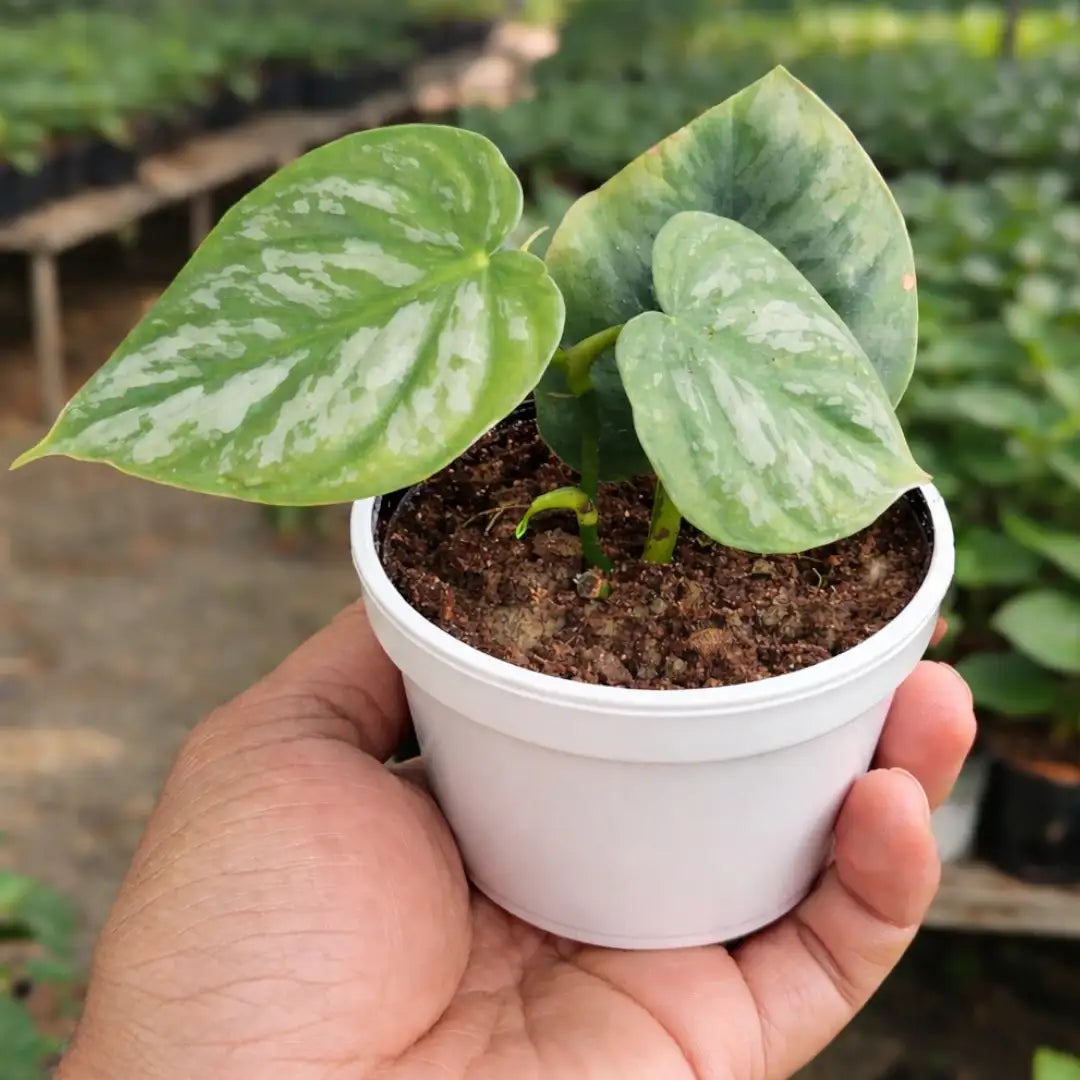
Philodendron brandtianum (Silver Leaf Philodendron)
Description
Philodendron brandtianum is native to tropical South America, where it is a climbing plant that is often called the silver leaf philodendron, or savannah philodendron. Its heart-shaped leaves are marked with a characteristic silvery-grey mottling down the veins of the leaves; the more mature the leaves are, the more obvious this marking is, while on young leaves the sheen is almost satin-like. Being a member of the Araceae family this philodendron is a vining plant in its natural habitat, while in the home it can be grown on a small support in a climbing fashion, or allowed to trail down from a shelf or hanging basket.
Indoor gardeners love this plant because in terms of overall habit, it has a more petite and much less leggy structure compared to its other philodendron counterparts. The plant does not grow aggressively or spread wildly and thus is very adaptable in small living spaces like apartments, study tables, balconies or office desks. Its variegated leaves bring in color to the room with very little effort required from the user and this is one of the reasons for suggesting it to new indoor gardeners.
Regarding location, this philodendron thrives in a bright room receiving a significant amount of indirect light. Direct afternoon sun should b
e avoided. An east facing window or a couple of feet away from a south facing one would be appropriate. It is not meant for shaded corners for long duration, as this would result in the fading of silver markings and shrinkage of leaves. This plant handles Indian indoor humidity levels adequately but likes extra humidity.
Key Features
- Heart-shaped leaves with inherent silver-grey variegation following the veins.
- Compact, vining habits are ideal for small spaces or shelves.
- Can be trained up a moss pole, or allowed to cascade from a hanging pot.
- Tolerates average indoor humidity without constant misting.
- Growth rate that is slow relative to most other philodendron species, requiring infrequent trimming.
- Suitable as a desk or shelf plant for homes and offices.
- Pretty tolerant of being occasionally under-watered once established.
- Its small size means it is perfect for a gift for any plant lovers out there
Care at a Glance
|
Aspect
|
Requirement
|
|
Sunlight
|
Bright, indirect light; avoid direct midday sun
|
|
Watering
|
Water when the top 2–3 cm of soil feels dry, typically every 7–10 days
|
|
Temperature
|
18°C to 30°C; protect from cold drafts and temperatures below 12°C
|
|
Humidity
|
Moderate to high; average room humidity is generally sufficient
|
|
Repotting
|
Every 1–2 years, or when roots are visible at drainage holes
|
|
Growth rate
|
Slow to moderate
|
Product Specifications
|
Specification
|
Detail
|
|
Plant common name
|
Silver Leaf Philodendron
|
|
Botanical name
|
Philodendron brandtianum
|
|
Plant type
|
Indoor foliage/climbing plant
|
|
Life cycle
|
Perennial
|
|
Suitable location
|
Indoor; bright indirect light areas
|
|
Sunlight exposure
|
Bright, indirect light
|
|
Bloom period
|
Rarely flowers indoors; grown primarily for its foliage
|
|
Special features
|
Silver-grey variegated heart-shaped leaves
|
|
Plant size at dispatch
|
3 inches
|
|
Bare-rooted/Pot
|
Optional
|
|
Pot size
|
3 inches
|
|
Pot material
|
Plastic
|
|
Soil type
|
Well-draining potting mix
|
|
Country of origin
|
India
|
|
Brand
|
Plant Orbit
|
|
Item weight
|
Varies by pot and soil moisture
|
|
Package dimensions
|
Varies based on plant size at time of dispatch
|
|
Seller
|
Plant Orbit Haldawni
|
What’s in the Box
- 1 × Live Philodendron brandtianum plant
- 1 × Pot (Bare-rooted / Pot: Optional)
- Potting mix
- Care guide
Important Notes
- Leaf size, variegation pattern, and overall shape can vary slightly from plant to plant, as this is natural for live plants.
- Some leaf drop or minor wilting may occur after transit; this typically recovers within a week or two once the plant settles into its new environment.
- Avoid placing the plant in direct, harsh sunlight, especially during summer afternoons, as this can scorch the leaves.
- During winter, watering frequency should be reduced since the plant’s growth slows down.
- Ensure the plant is out of cold drafts, away from air conditioner vents and heating.
- When you unbox the plant be careful and hold the leaves and stem, don't pull it off by those.
Frequently Asked Questions
Q: The leaves on my philodendron are turning yellow. Why?
A: Most commonly, yellowing leaves are due to overwatering, especially when the soil remains wet for long periods of time. Ensure your plant is planted in a pot with drainage holes and that you are letting the top inch of soil dry out between waterings. If it is just one or two older leaves that turn yellow occasionally it is nothing to worry about as the plant grows.
Q: How often should I water this plant?
A: This depends on how warm and humid it is in your home but generally once every 7 to 10 days will be adequate. Use your finger to test the soil before you water and don't rely on a timetable as humidity and temperature vary significantly.
Q: This plant can be grown completely indoors.
A: Philodendron brandtianum is suitable for growing indoors given sufficient bright, indirect light. Place it where it will receive indirect light, such as beside a window that receives filtered sun.It is not well-suited to being exposed to many hours of direct, bright light.
Q: How fast does this plant grow, and will it need support?
A: The growth rate is slow to moderate. Since it's a vining plant, a moss pole or trellis would be good if you want it to climb; otherwise, you could also let it trail from a hanging planter or shelf.
Q: When should I repot this plant?
A: You will most likely need to repot the plant every 1-2 years. You will definitely need to repot the plant when you see the roots coming out of the bottom of the pot or the plant starts drying out extremely fast. Try to use only a slightly bigger pot than the one the plant is already in, because you do not want a pot to hold extra moisture.
Q: Do I need to fertilise this plant, and how often?
A: A balanced liquid fertiliser at half the recommended strength, applied every 4-6 weeks throughout the growing season (spring and summer), is usually adequate. Withholding or reducing feeding can be done over winter when the plant's growth is slowest.