
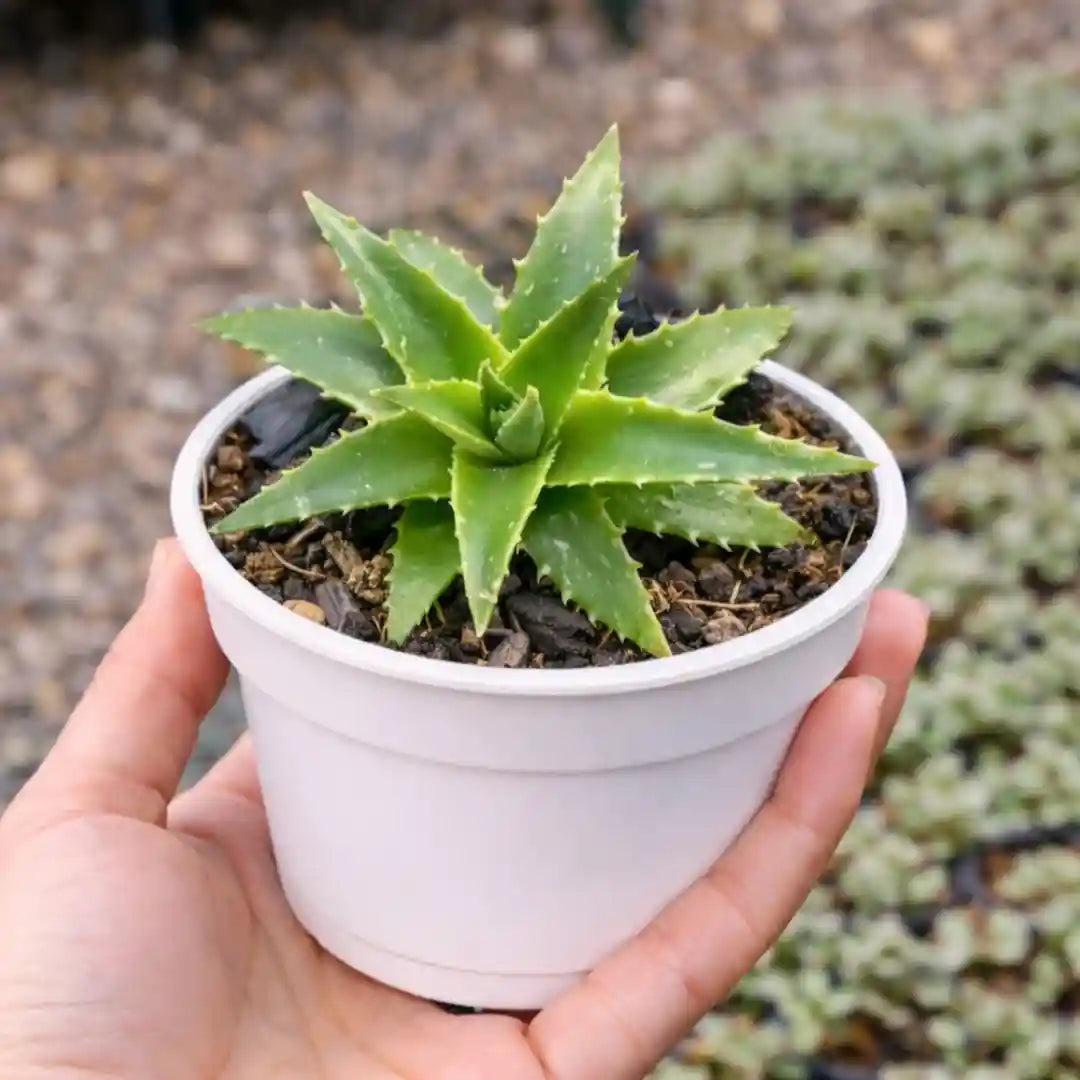
Dyckia brevifolia
Description
Dyckia brevifolia is small and clumping, and is a terrestrial bromeliad that is originally from Brazil. Other names by which it is referred to are Pine Apple Dyckia or Sawblade. You’ll find bromeliads in this species growing among the rocks. The plant forms a compact rosette of rigid, narrowing leaves up to 8 inches wide and has small spines on leaf edges that provide a “saw blade “edge (hence its common name). The leaves are green and slightly waxy or powdery, and old plants develop tall flower stalks with tiny yellow bell-shaped flowers in late spring or summer.
A hardy low care plant which fits in well in rockeries, succulent gardens and bright sunny sites outdoors, or can also be grown indoors with bright indirect sunlight. Prefers full sun to good light; a strong sun will promote a well formed, flower forming plant but will also tolerate some partial shade. Often categorized together with succulents due to its low water needs and high drought tolerance but it is technically a 'non-succulent'. It does not store water in its leaves as succulents do, preferring to be semi-dormant in times of stress, allowing the rosette to wilt somewhat under duress and to quickly recover when water is supplied.
Dyckia brevifolia forms a clumping mound and spreads slowly so it also looks at home bordering a bed, or at home amongst boulders or dry garden mix, and in a sunny balcony pot. Dyckia brevifolia is a good selection for an 'all weather', care-minimal plant after its first year or so for any sun-loving garden. Spiky margins make planting where it's unlikely to be brushed up against desirable but this hardiness is key to their success year after year.
Key features
- Tight rosette of stiff, tapering green leaves with saw-like spiny margins
- Clump-forming growth habit that spreads gradually into a small colony over time
- Produces tall flower stalks with small yellow bell-shaped blooms in season
- Highly drought-tolerant once established, surviving long dry spells
- Thrives in full sun, making it well suited to sunny balconies and rockeries
- Low-maintenance and hardy, needing minimal ongoing care
- Can tolerate brief cool spells better than many other bromeliads
- Compact size makes it a good fit for pots as well as outdoor garden beds
Care at a glance
|
Aspect
|
Requirement
|
|
Sunlight
|
Full sun to bright light for best growth and flowering
|
|
Watering
|
Water sparingly; allow soil to dry out almost completely between waterings
|
|
Temperature
|
Warm to moderate conditions; tolerates brief cool spells but not hard frost
|
|
Humidity
|
Adapts well to low humidity; no misting required
|
|
Repotting
|
Every 2 to 3 years, or once offsets crowd the pot
|
|
Growth rate
|
Slow to moderate grower
|
Product specifications
|
Specification
|
Detail
|
|
Plant common name
|
Sawblade / Pineapple Dyckia
|
|
Botanical name
|
Dyckia brevifolia
|
|
Plant type
|
Terrestrial bromeliad
|
|
Life cycle
|
Perennial, evergreen
|
|
Suitable location
|
Sunny outdoor spot, rockery, or bright balcony
|
|
Sunlight exposure
|
Full sun to bright light
|
|
Bloom period
|
Spring to summer (small yellow bell-shaped flowers on a tall stalk)
|
|
Special features
|
Spiny, saw-edged rosette leaves; drought-tolerant; clump-forming
|
|
Plant size at dispatch
|
Approx. 3 inches
|
|
Bare-rooted/Pot
|
Optional
|
|
Pot size
|
3 inches
|
|
Pot material
|
Plastic nursery pot
|
|
Soil type
|
Well-draining cactus, succulent, or bromeliad mix
|
|
Country of origin
|
India
|
|
Brand
|
Plant Orbit
|
|
Item weight
|
As per actual packed weight
|
|
Package dimensions
|
As per actual packaging
|
|
Seller
|
Plant Orbit Haldawni
|
What's in the box
- 1 × Live Dyckia brevifolia plant
- 1 × Pot (Bare-rooted / Pot: Optional)
- Potting mix
- Care guide
Important notes
- Natural variation in leaf size, spine density, and rosette shape is normal from plant to plant
- Some leaf stress or minor wilting may appear after transit; the plant usually bounces back within a couple of weeks once watered and settled
- Handle carefully while repotting or moving the plant, as the leaf margins carry small, sharp spines
- Introduce the plant to full sun gradually if it has been kept in lower light during transit
- Growth slows down in cooler months, which is a normal seasonal pattern for this plant
- Keep away from overwatering, as sitting in wet soil for long periods can lead to root rot
Frequently asked questions
Q: My Dyckia brevifolia seems wilting/shrinking. What's wrong with it?
A: The Dyckia brevifolia is what is referred to as xerographic bromeliads. In order to survive a dry period the plant semi-dormancy and its rosette will slightly wilt and shrink under drought stress. That’s perfectly normal and soon as the plant is watered it should fill back up.
Q: How frequently should this plant be watered?
A: Water little so that it almost dries out from one watering to the next, especially during the warmer months when you can add a bit of watering, but from September onwards it may not require much water at all since it develops far more slowly.
Q: Can Dyckia brevifolia be grown indoors?
A: Can be indoors as long as you have a very bright location, I do have an example thriving in a very bright south-south/west facing window. The bright light keeps the plant compact and looking good, however it probably does better outdoors in direct sunlight.
Q: Does this require full sun?
A: Yes, it grows and blooms best when given full sun to very bright light but it will tolerate some shade in my experience although the rosette may get a little looser as a result and bloom.
Q: Is a Dyckia brevifolia the same as a succulent?
A: No, strictly speaking it is not, but for ease it is often found within the succulents. They are not in the ‘true’ succulent group as Dyckia brevifolia do not store water within the leaves as many true succulents can, as they do this by slowing growth during the dry periods rather than drawing on the leaf.
Q: Is it necessary to fertilise the plant often?
A: The fertiliser is not necessary but a balanced plant food feed can be used sparingly on this plant at every 2-3 months throughout the main growing season to promote good growth, avoid feeding during the dormant, colder season?